
 Image 1 of 1
Care: Use a well-draining potting medium, such as a blend of regular potting mix amended with perlite or orchid bark.
Water: Water thoroughly only when the top inch or two of soil has completely dried out, which is typically every one to two weeks.
Light: Place it in bright, indirect sunlight for at least six hours a day, avoiding harsh direct rays that can burn the leaves.
Toxicity: Non Toxic
Propagation: Stem cuttings are the most reliable and straightforward way to propagate a Money Tree
Fun Facts: A classic Money Tree typically sports five distinct leaflets on each leaf cluster. In Chinese culture, five is a lucky number representing the five basic elements: water, earth, fire, wood, and metal. In Feng Shui practices, it is believed to bring positive energy (Chi) and financial luck to a household. The braided stems seen on retail Money Trees are not natural. Nurseries braid the young, flexible green trunks before they turn woody to symbolize "locking in" wealth and prosperity.
Water: Allow the top 2 to 3 inches of soil to dry out completely before watering again.
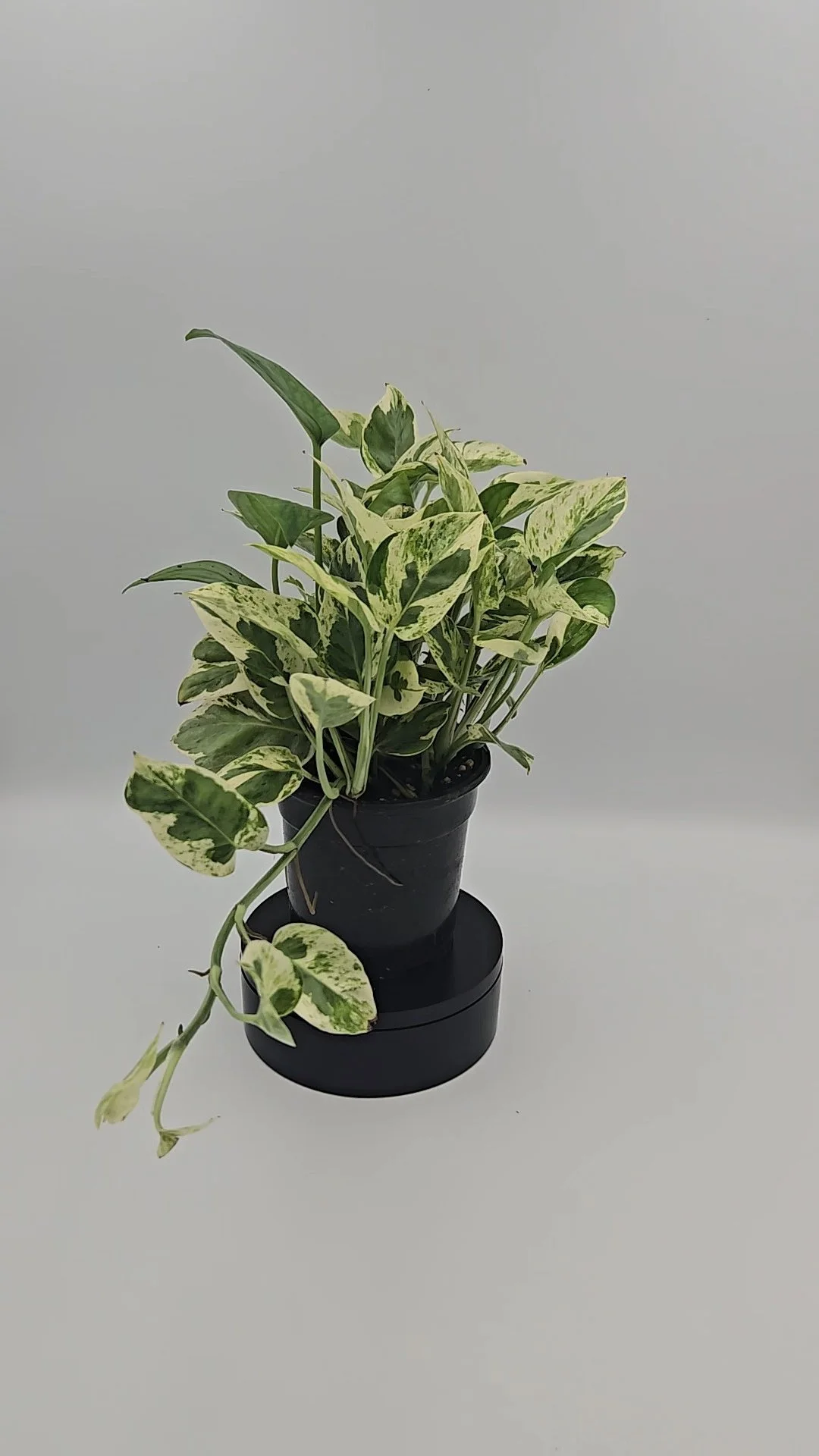
Light: Provide bright, indirect light to protect the plant's high level of cream and white variegation.
Toxicity: Toxic
Propagation:
Fun Facts: Because its coloring behaves like a patchwork mosaic, a single Manjula vine can produce completely white leaves, solid green leaves, or beautifully marbled patterns all on the same stem. Unlike standard Golden Pothos which have flat, straight foliage, Manjula leaves feature distinctly crinkled, wavy margins that cup upward.
Care: Use a well-draining potting medium, such as a blend of regular potting mix amended with perlite or orchid bark.
Water: Water thoroughly only when the top inch or two of soil has completely dried out, which is typically every one to two weeks.
Light: Place it in bright, indirect sunlight for at least six hours a day, avoiding harsh direct rays that can burn the leaves.
Toxicity: Non Toxic
Propagation: Stem cuttings are the most reliable and straightforward way to propagate a Money Tree
Fun Facts: A classic Money Tree typically sports five distinct leaflets on each leaf cluster. In Chinese culture, five is a lucky number representing the five basic elements: water, earth, fire, wood, and metal. In Feng Shui practices, it is believed to bring positive energy (Chi) and financial luck to a household. The braided stems seen on retail Money Trees are not natural. Nurseries braid the young, flexible green trunks before they turn woody to symbolize "locking in" wealth and prosperity.
Water: Allow the top 2 to 3 inches of soil to dry out completely before watering again.
Light: Provide bright, indirect light to protect the plant's high level of cream and white variegation.
Toxicity: Toxic
Propagation:
Fun Facts: Because its coloring behaves like a patchwork mosaic, a single Manjula vine can produce completely white leaves, solid green leaves, or beautifully marbled patterns all on the same stem. Unlike standard Golden Pothos which have flat, straight foliage, Manjula leaves feature distinctly crinkled, wavy margins that cup upward.